Day Trips From New York With A Suitcase: Where The Case Goes While You Go
Philadelphia, the Hudson Valley, even Washington: all reachable between two New York nights. The only hard question is what happens to the suitcase, and the answer is cheaper and simpler than most travellers expect.
Short answer
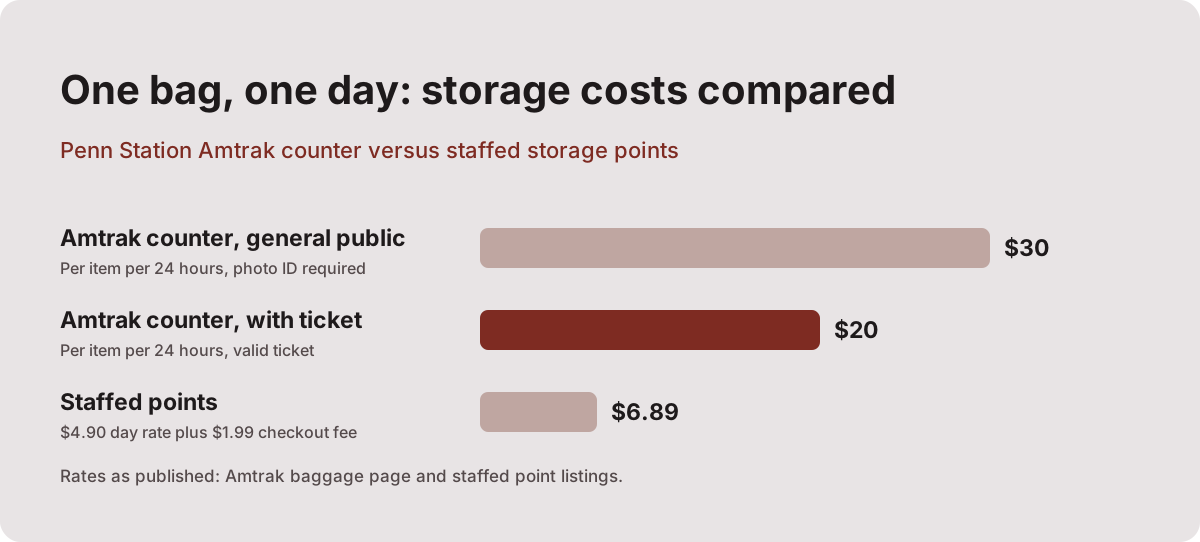
Store the case at a station bag drop before you leave: Amtrak's staffed counter at Penn Station charges $20 per item per 24 hours with a ticket, $30 for the general public with photo ID, while staffed storage points around the stations run a typical $4.90 per bag per day plus a $1.99 checkout fee.
The train to Philadelphia leaves Moynihan Train Hall roughly every hour, and the Hudson Valley lines leave Grand Central all morning. Neither ride is pleasant with a suitcase wedged into a seat beside you, and several of the day-trip destinations, from museum galleries to observation decks, refuse luggage at the door outright. The good news is that New York gives you a genuinely workable alternative: leave the case in the city, ride out with a day pack, and collect it on the way back in. This guide lays out what that costs, which trains accept which bags, and the hours that decide whether the plan survives a late return.
Can You Really Do A Day Trip From New York Without Dragging A Suitcase?
Yes, you can absolutely do a day trip from New York without dragging a suitcase, and it is the standard play for anyone squeezing Philadelphia or the Hudson Valley between two New York hotel nights. Leave your case at a staffed bag drop near your departure station, ride out light, then collect it when you return.
The reason this works is that New York's storage scene, thin on lockers as it is, is concentrated exactly where day-trippers need it: the stations. There is no public locker bank at Penn, Grand Central or the Port Authority Bus Terminal, and the one real left-luggage counter inside a Manhattan transport hub is Amtrak's staffed service at Penn Station and Moynihan Train Hall. Around those hubs, though, sits a dense ring of staffed storage points in shops, cafes and hotels, every one of them a counter with a person behind it rather than a self-service machine.
The day-trip pattern also solves the venue problem before it starts. Most of the places people day-trip to, Independence Hall, Hudson River estates, museum-heavy Washington, have their own bag rules, and a suitcase you left in New York never has to argue with any of them. The planning question is not whether to store, it is where, for how long, and what happens if your return train runs late. Those three questions are what the rest of this guide answers, with the operator's own published figures.
For the overnight and multi-day side of the same question, including what happens when a day trip quietly turns into two nights, see overnight and multi-day bag storage in NYC.
Where Do You Leave The Case Before You Ride Out?
The two workable answers are Amtrak's staffed bag-storage counter at Penn Station, which is open to the general public with photo ID at $30 per item per 24 hours, and the staffed storage points clustered around the departure stations, which run a typical $4.90 per bag per day plus a $1.99 per-bag checkout fee. Both are counters with staff, not lockers: New York's transport hubs publish no public locker bank anywhere.
The Amtrak counter is the only left-luggage service physically inside a Manhattan transport hub, and it is open to more people than most travellers assume. Amtrak's own baggage page states plainly: "Temporary bag storage is available to both Amtrak customers (valid ticket required) and the general public (valid photo ID required)." The rates are $20 per item per 24-hour period for Amtrak customers and $30 per item for everyone else, with the rate charged again at the start of each additional 24-hour period. Moynihan Train Hall's own page adds that the storage is provided by Amtrak "for all passengers, regardless of the railroad operator that you're traveling with", and to arrange it at the Amtrak Customer Service desk. The two official pages do not say exactly the same thing about who qualifies, so bring photo ID and, if you have one, a ticket, and let the desk decide.
The second answer is the ring of staffed storage points around the stations. This site lists 27 storage points within 800 metres of the Penn Station anchor, rated 4.84 across 3,583 reviews, and 14 within 800 metres of Grand Central, rated 4.7 across 502 reviews. Every one is a staffed counter at a shop, cafe or hotel, and every booking covers the bag for the calendar day you paid for. If your day trip leaves from Grand Central, the Grand Central left luggage options are the densest fit; if you are riding Amtrak or LIRR from Penn, the Penn Station bag drop points sit along the walking route into the station.
One planning note that surprises people: you do not need a train ticket at all to use either answer. The Amtrak counter takes the general public with photo ID, and the staffed points take anyone with a booking. A day trip from New York with luggage is therefore not a compromise, it is a two-minute errand on the way to the platform. The full mechanics of a drop-off, from booking to claim ticket to pickup, are covered in how a New York bag drop-off works.
What Does A Day Of Storage Actually Cost?
For one bag for one day, the staffed points cost $6.89 all in: the $4.90 typical day rate plus the $1.99 per-bag checkout fee, which is charged once per bag rather than per night. Amtrak's counter is $30 per item per 24 hours for the general public, or $20 with a ticket, so the staffed points are the cheaper day-trip answer unless you are already riding Amtrak.
The fee structure matters more than the headline rate. The $1.99 checkout fee is per bag, not per day, so it does not repeat each night the way the day rate does: a three-day store of one bag is $16.69 all in, the published arithmetic of $4.90 times three plus the once-per-bag fee. Radical Storage, the network behind the staffed points, advertises a "from $2.90" rate on its New York page, but its own disclaimer now says that is "the lowest currently available city price, not a promise that every location or bag category has the same rate"; the measured reality is that 168 of 178 New York point cards show $4.90. In one corner of the city a cheaper $2.90 rate exists at two Central Park points, but everywhere else $4.90 is the number to expect.
| Option | Typical cost, one bag, one day | Who can use it | What it is |
|---|---|---|---|
| Amtrak counter, Penn Station | $20 with a ticket, $30 general public, per 24 hours | Amtrak customers with a valid ticket; general public with photo ID | Staffed counter inside the station complex |
| Staffed points near Penn Station | $4.90 plus $1.99 checkout fee | Anyone with a booking | 27 staffed counters within 800 m |
| Staffed points near Grand Central | $4.90 plus $1.99 checkout fee | Anyone with a booking | 14 staffed counters within 800 m |
| Staffed points near Times Square | $4.90 plus $1.99 checkout fee | Anyone with a booking | 44 staffed counters within 800 m |
| Staffed points in Brooklyn | $4.90 plus $1.99 checkout fee | Anyone with a booking | 11 staffed counters within 800 m |
For a fuller breakdown across every option in the city, including what the guarantee attached to a booking actually covers and what it excludes, see what luggage storage costs in New York City and what the Radical Storage guarantee actually covers.
The comparison with carrying the case is not close. A day trip to Philadelphia with a suitcase means hauling it through two station concourses, finding overhead space on a crowded train, and then dealing with whatever bag policy your destination has, all to save $6.89. The arithmetic is the reason the station-storage pattern exists.
Which Day Trips Work Best With A Stored Bag?
The trips that pair best with station storage are the ones that start and end at a staffed hub: Philadelphia from Penn Station, Hudson Valley towns from Grand Central, and Washington from Penn on Amtrak. Each is a same-day out-and-back on frequent service, and each has destinations that refuse large bags, so the case you left in New York is not just convenient, it is the difference between entering and being turned away.
Philadelphia is the classic. Amtrak runs the route from Moynihan Train Hall, the ride is short, and Independence Hall and the museums on the mall have the kind of security screening that makes a suitcase a liability. Because the Amtrak bag-storage counter sits inside the very complex you depart from, the sequence is almost frictionless: drop the case at the Customer Service desk, board, come back, collect. The counter's per-item pricing means a couple with four bags pays four items' worth, so compare that against the staffed points around Penn, where the same four bags are simply four per-bag day rates plus four checkout fees. The wider set of guides lives on Luggage Storage Lockers in New York City.
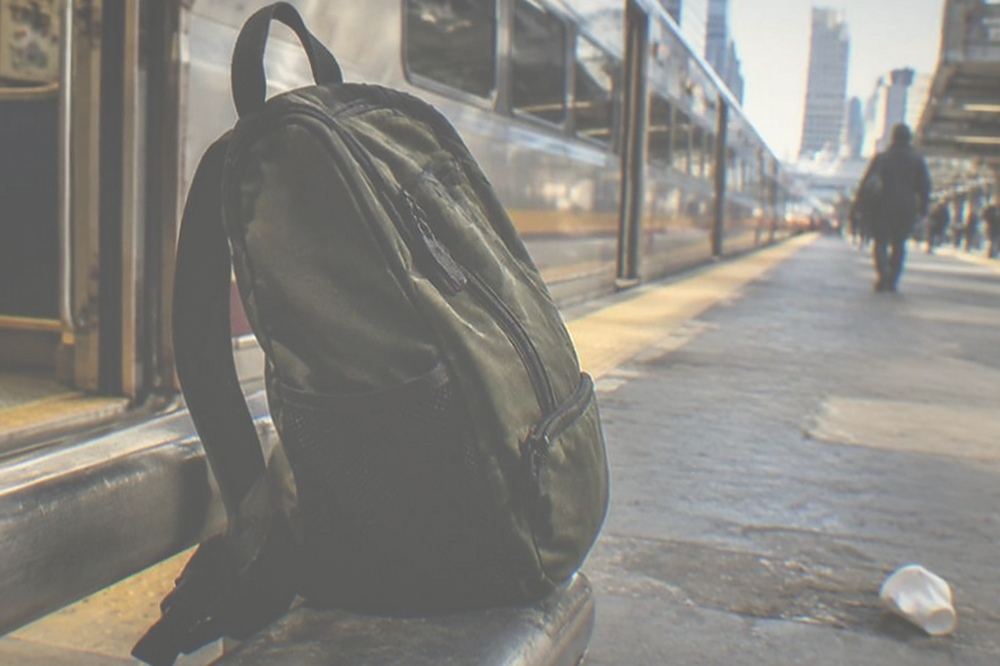
The Hudson Valley trips leave from Grand Central, and Grand Central itself publishes no storage at all: the terminal's own FAQ answers the question flatly, "there are no luggage storage services at Grand Central. Please plan ahead if you are arriving with luggage." The workaround is the ring of staffed points within 800 metres, 14 of them, rated 4.7 across 502 reviews, which is where the case goes before you walk into the terminal. The same pattern covers the Port Authority Bus Terminal for bus day trips: the Port Authority states it "does not provide baggage storage facilities at the bus terminal", but 36 staffed points sit within 800 metres, rated 4.79 across 2,126 reviews.
For the Amtrak side of the counter, including checked baggage, which is a different service that travels with your train rather than staying behind, see Amtrak baggage and bag storage at Penn Station.
What Do The Trains Themselves Say About Luggage?
None of the New York-area rail operators bans suitcases from trains, but each publishes rules about where bags go and what happens if you leave them. The MTA's rider guide advises "don't travel with more than you can carry on your own, and avoid rush hour if you're transporting something big", the LIRR's current timetable states "luggage may not be left unattended", and Amtrak allows two carry-ons plus a personal item per passenger.
The subway is the interesting one, because the rulebook is narrower than people assume. The MTA Rules of Conduct contain no suitcase size limit at all: the only dimension anywhere in the document is thirty inches, and it applies to wheeled carts, not luggage. Everything else is a behaviour test, and the fines are real. Carrying an object that blocks a door or passage is a $75 offence under section 1050.9(g), occupying more than one seat with a bag is $50 under 1050.7(j), and obstructing operations or traffic is $100 under 1050.6(a). The agency's own rider guide puts the whole policy in one sentence aimed exactly at this reader: "Don't travel with more than you can carry on your own, and avoid rush hour if you're transporting something big."
The LIRR, which carries most Hudson Valley and Long Beach day-trippers, publishes its rule in the City Terminal timetable effective March 23, 2026: "Luggage should be stored in overhead racks and not take up seat space or block the aisles or doorways of trains. Luggage may not be left unattended. Bags and containers are subject to random search by MTA police." That unattended-bag clause is the strongest reason to store rather than park a case: you cannot leave a suitcase on a LIRR train while you ride out and back.

Amtrak's carry-on allowance, for the trips where you do take the case, is two carry-on items of up to 50 lbs and 28 x 22 x 14 inches each, plus one personal item, with a $20 excess fee per bag above the limits. The same page adds a rule that bites day-trippers in both directions: "Do not store items in empty seats, aisles, vestibules or other areas" where they may annoy other passengers or create a hazard. The full dimension-by-dimension breakdown is in taking luggage on the subway and commuter rail.
| Operator | Published luggage rule | What it means for a day trip |
|---|---|---|
| NYC Subway | No suitcase size limit; behaviour rules with $50 to $100 fines | Carrying is allowed, but blocking seats or doors is priced |
| LIRR | Luggage in overhead racks, never unattended, subject to random search | You cannot park a case and walk away |
| Amtrak | Two carry-ons plus a personal item; $20 per excess bag | A suitcase rides free within the size limits |
| Staten Island Ferry | No property left unattended in terminals or on ferries | A parked case violates the DOT rules |
What If Your Return Train Runs Late?
The hours that matter are the storage point's own closing time and, for the Amtrak counter, the building's: Moynihan Train Hall is open 5:00 AM to 1:00 AM daily, and between 1:00 AM and 5:00 AM Amtrak and LIRR services move to Penn Station east of 8th Avenue. A bag stored at a staffed point is only retrievable while that point is open, so a very late return means checking hours before you commit.
The overnight gap at Moynihan is the detail almost nobody plans for. The hall's own page publishes it twice: "Opening Hours: 5:00AM - 1:00AM, Daily / Note on Overnight Service: From 1:00AM - 5:00AM Amtrak and LIRR use Penn Station (east of 8th Ave)". If your day trip returns on the last train and it slips past 1:00 AM, you are walking across 8th Avenue to the old Penn side, and the bag-storage counter's own hours, which Amtrak does not publish separately, may or may not track the building. Plan a return with margin.

The staffed points publish their hours on their listings, and the pattern is that most, but not all, run late. Of the 14 Grand Central points, 13 publish hours; of the 44 Times Square points, 42 publish hours; all 33 Central Park points and all 11 Brooklyn points publish theirs. Before booking, read the hours on the listing and match them against your worst-case return, not your planned one. A delayed Philadelphia train turns a 10 PM pickup into an 11:30 PM one, and a point that closes at 10 PM keeps your case until morning.
| Scenario | What to check before you ride out |
|---|---|
| Return before midnight | Almost any staffed point works; hours are published on each listing |
| Return after 1:00 AM at Penn | Moynihan is shut; Amtrak and LIRR move to the east-of-8th-Avenue side |
| Return on a delayed last train | The point's closing time, against your worst-case arrival |
| Overnight change of plans | Multi-day pricing: the $1.99 fee is once per bag, the $4.90 repeats daily |
For trips that end after the points close, the honest options are laid out in 24-hour and late-night luggage storage in NYC, and the delayed-train scenario specifically is covered in what happens if your train or flight is delayed.
What If You Decide To Take The Case After All?
Taking the suitcase on the day trip is legal on every operator but rarely wise: the MTA's own advice is to avoid rush hour with anything big, the LIRR forbids leaving bags unattended, and several major destinations refuse luggage at the door. If the case must come, the workable pattern is a hotel hold before you leave and a station drop when you return.
If you are staying at a New York hotel, the first move is the front desk, not the station. Hotels routinely hold bags for their own guests before check-in and after checkout, and the published policies show the shape of it: Broadway Plaza Hotel stores luggage before check-in and on the day of departure only, two bags complimentary and $5.00 per bag beyond that, with no overnight holds; The New Yorker stores bags for $5 per bag "for Registered Guests only". No New York hotel publishes a policy on holding bags for non-guests, so if you are not staying there, you have no entitlement and it is entirely at the hotel's discretion. The details, and the check-in time spread across five named properties, are in NYC hotel check-in and checkout times.
The carrying case, literally, is mostly a subway problem. The MTA's advice is the agency's own: make space for other riders, don't block doors, stairs or passageways, and avoid rush hour with anything big. A wheeled suitcase is not a wheeled cart under the rules, so the thirty-inch limit does not apply, but the $50 seat-obstruction fine does if the case takes the seat beside you. The fuller rules, including what fits in overhead racks, are in bag size, weight and oversized item rules.
For Brooklyn-based travellers the arithmetic is the same, just with a smaller ring: 11 staffed points within 800 metres of the Brooklyn anchor, rated 4.82 across 79 reviews, all 11 publishing hours, at the same $4.90 typical day rate plus the $1.99 checkout fee. Whether you leave from Atlantic Terminal or carry the case into Manhattan first, the drop is a booked counter, not a locker, and the day rate is the same one the Manhattan points charge.
The last practical point is about what goes in the stored bag. The network's terms prohibit storing electronics outright, listing "Technological material (iPhone, iPad, Tablet, PC, smartphones" among the prohibited items, and a prohibited item voids the entire guarantee claim if something goes wrong. Take the phone and the laptop with you on the day trip, which you were going to do anyway, and leave the case holding clothes. The full prohibited list is in what you cannot leave in a stored bag in New York.
Common Questions About Day Trips From New York With A Suitcase
Can you really do a day trip from New York without dragging a suitcase?
Yes. Store the case at a staffed bag drop near your departure station, ride out with a day pack, and collect it on the return. Amtrak's staffed counter at Penn Station takes the general public with photo ID at $30 per item per 24 hours, and staffed points around the stations run a typical $4.90 per bag per day plus a $1.99 checkout fee.
Where do you leave the case before you ride out?
Two workable answers: Amtrak's bag-storage counter inside Penn Station and Moynihan Train Hall, open to the general public with photo ID, or one of the staffed storage points within 800 metres of your departure station, 27 near Penn, 14 near Grand Central, 44 near Times Square. All of them are staffed counters, not lockers.
What does a day of storage actually cost?
At the staffed points, one bag for one day is $6.89 all in: the $4.90 typical day rate plus the $1.99 per-bag checkout fee, which is charged once per bag rather than per night. Amtrak's counter is $30 per item per 24 hours for the general public, or $20 with a valid ticket.
What do the trains themselves say about luggage?
No New York operator bans suitcases. The subway has no size limit for luggage, only behaviour rules with fines of $50 to $100; the LIRR requires luggage in overhead racks and states bags may not be left unattended; Amtrak allows two carry-ons plus a personal item, with a $20 fee per excess bag.
What if your return train runs late?
Check the storage point's published closing time against your worst-case return, not your planned one. Moynihan Train Hall is open 5:00 AM to 1:00 AM daily, and between 1:00 AM and 5:00 AM Amtrak and LIRR services move across 8th Avenue to Penn Station, so a very late return changes where you walk, and possibly when you can collect.
What if you decide to take the case after all?
Carrying is legal on every operator but rarely wise. Ask your own hotel to hold the bag first, since hotels routinely store luggage for guests before check-in and after checkout; a non-guest has no entitlement. If the case must travel, follow the MTA's own advice and avoid rush hour with anything big.