Can I Keep My Luggage At The Airport And Go Out
JFK is the only New York airport where you can leave a bag and head into the city. Here is exactly what the published rules require, what it costs, and how the timing works.

Can I Keep My Luggage At The Airport And Go Out
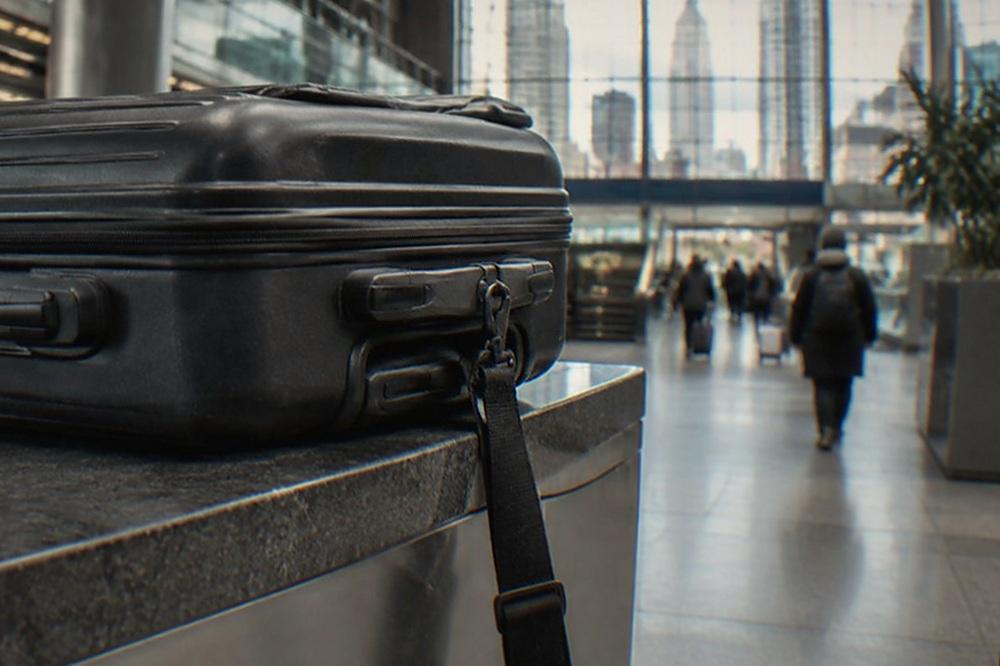
Yes, but only at JFK, and only if you hold a confirmed ticket. Smarte Carte runs staffed bag-storage counters at JFK Terminal 1 and Terminal 4, and the Terminal 4 counter is open 24 hours. LaGuardia and Newark list no baggage storage in their own published services, so at those two airports no baggage storage appears in the services either airport publishes, and the bag has to go off-airport.
The question behind the question is nearly always a layover. You land at JFK at 10 in the morning, your next flight leaves at 9 at night, and Manhattan is sitting there an hour away. The bag is the only obstacle. Everything below is built from what the operators themselves publish, because this is a decision that hinges on requirements, hours and fares, and almost none of that is guesswork-proof from a travel forum.
Start with the blunt geography. Of the three Port Authority airports, only JFK publishes a baggage-storage service. Its own services list names it plainly: "Baggage carts / Baggage office / Baggage storage / Baggage wrapping / Oversized baggage". LaGuardia's identically structured list stops at carts, baggage office and oversized baggage. Newark's does the same. So the "keep my luggage at the airport and go out" play is a JFK play, full stop, and the sections below treat it that way.
There is a second option worth naming early, because it changes the arithmetic for a lot of travellers. If your layover is long enough to reach Manhattan, you can also store the bag in the city rather than at the airport, at a staffed bag drop near where you actually want to be. Luggage Storage Lockers in New York City publishes eight areas of staffed storage points across the city, and the difference between storing at JFK versus storing at Penn Station is often the difference between two extra AirTrain legs and none.
What JFK Bag Storage Requires Before You Can Walk Out
Two documents and one condition: a photo ID and a boarding pass are required at drop-off, full payment is due when you hand over the bag, and the Terminal 4 counter serves customers "regardless of which terminal you are flying to or from". Terminal 1 runs 7:00 AM to 10:00 PM; Terminal 4 runs 24 hours. Storage at T4 is available for a few hours or up to 72 hours.
The boarding-pass requirement is the one that trips people up, so read it twice. Smarte Carte's own page states it in its rules block: "Photo ID and Boarding Pass Required". That means the service is built for passengers, not for someone who drove to JFK to dump a bag for the week. If you are mid-journey with a confirmed onward ticket, you qualify. If you are a local with no flight, nothing published says you can use it.
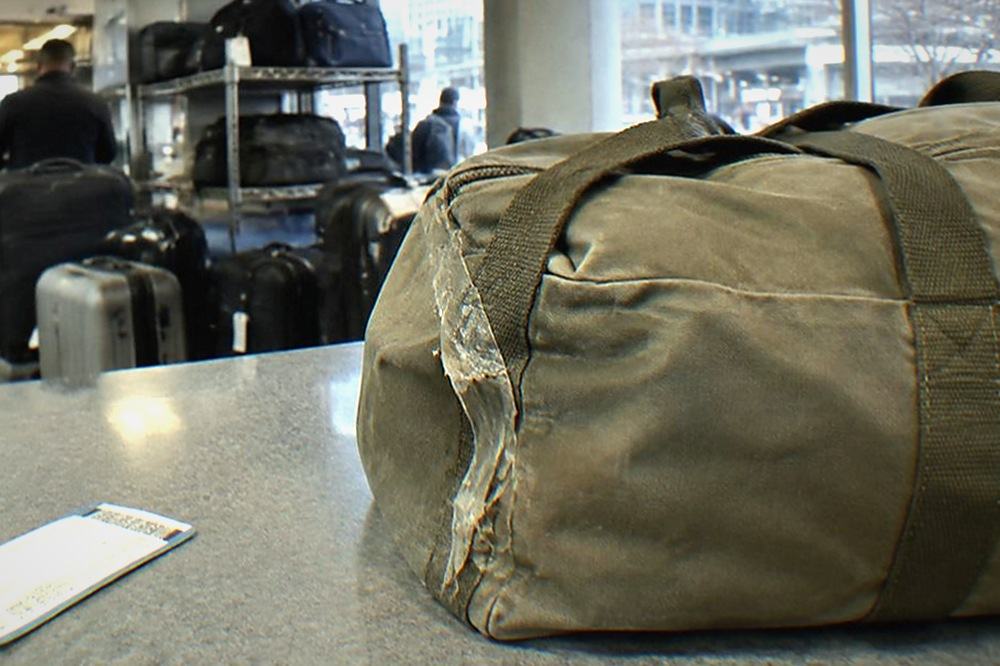
The rules block carries more, and every line of it is practical. "All Bags Must Be Locked" is the operator telling you to bring your own lock, which genuinely matters if your case has a broken zip pull. No flammable materials, no alcohol, no firearms, no perishables. And one line with money in it: "Bags stored for more than 8 hours will be subject to the daily rate", which tells you the pricing structure switches from hourly thinking to daily thinking fairly quickly. The operator also states that all bags are screened in accordance with TSA safety guidelines, so expect an inspection at the counter rather than a silent handover.
The price is the honest gap in all of this. No Smarte Carte page, no JFK page and no Port Authority page publishes a rate for this storage, and the booking flow does not yield one either. The operator publishes hours, rules and a phone number, 718-916-8963, but no rate. Anyone who quotes you a JFK storage price with confidence is filling that gap from memory. If you need the number before you fly, call it; that is what it is there for, and this site will not invent the figure for you.
One wrinkle worth knowing: the operator publishes a Terminal 1 counter with its own hours, while the airport's own Terminal 1 page contains no mention of baggage storage at all. Both are real pages and they disagree by omission. If your layover routes you through Terminal 1, do not assume the counter is where the airport's signage says nothing about. The Terminal 4 counter is the one both sides confirm, and it is the 24-hour one.
How Long You Actually Have In The City
The AirTrain fare between JFK and Jamaica or Howard Beach stations is $8.75 one way, and the airport itself warns that construction "may take longer than usual" and asks travellers to "allow for significantly more time". The T4 counter's 24-hour window and 72-hour storage cap mean the bag is not the constraint; the clock on your return is.
Work the timing backwards. You want to be back at your departure terminal with the bag collected, re-screened and at the gate before boarding closes. The airport publishes no minute figure for the construction delay and neither will this page, but the advisory exists precisely because the margin people used to plan on has shrunk. Treat the AirTrain leg as variable, not fixed.
The airport also says, in its own words, that the AirTrain system is accessible for "travelers with mobility devices, strollers, or luggage", with elevators and escalators at the stations. That is JFK acknowledging suitcases as a normal payload, which is a small mercy compared with the subway, where the MTA's rider guide flatly advises: "Don't travel with more than you can carry on your own, and avoid rush hour if you're transporting something big."
Here is the decision most layover travellers actually face. If your window in Manhattan is four hours or less, the round trip eats most of it and the bag is barely worth collecting. If your window is six hours or more, storing at JFK and travelling light both ways usually wins, because you ride the AirTrain unencumbered and collect the bag only once, on the way back out. The alternative, carrying the case the whole time, means dragging it through every turnstile and every museum door, and New York venues are famously unfriendly to luggage: the Whitney prohibits "luggage of any size or type", the Empire State Building bans "large bags, suitcases, carry-on luggage" and states outright that there are no storage facilities on site.
There is a third shape, though, and it is the one that connects this question to the rest of the city. If you are storing the bag anyway, you can store it at the Manhattan end instead of the airport end, ride in once, and spend your whole window in the city. Penn Station's bag drop is the natural anchor for that play, because the AirTrain connects to it via Jamaica and the LIRR, and the storage points cluster exactly where the trains arrive.
Penn Station Bag Drop covers 27 staffed storage points within 800 metres of the station, rated 4.84 across 3583 reviews, at a typical $4.90 per bag per day plus the $1.99 per-bag checkout fee. Every point is a staffed counter, not a locker, and the hours are published on each listing. For a layover that lands you in Midtown, that is a bag solved for under seven dollars a day, with no boarding pass required.
One more thing about the Penn Station option: it is also the answer for the return leg. When your layover ends and you head back out to JFK, you collect the bag from a counter a short walk from your train, rather than planning an airport detour around a storage desk's closing time. The AirTrain runs from Jamaica or Howard Beach, so the geography lines up without any backtracking through Manhattan with a suitcase.
What The Alternatives Cost, Honestly Compared
Airport storage at JFK has no published rate, so the only honest comparison is between the city's staffed bag drops and Amtrak's counter at Penn Station: $20 per item per 24 hours with a train ticket, $30 for the general public with photo ID, versus a typical $4.90 per bag per day plus a $1.99 checkout fee at a city bag drop.
The Amtrak counter deserves its own paragraph because it is the closest thing New York has to classic left luggage. Amtrak publishes its terms plainly: "Temporary bag storage is available to both Amtrak customers (valid ticket required) and the general public (valid photo ID required)", at $20 per item per 24 hours for customers and $30 for everyone else, charged again at the start of each additional 24-hour period. Note the two official sources do not fully agree on who qualifies: Moynihan Train Hall's own page says storage is provided "for all passengers, regardless of the railroad operator", while Amtrak's page says the general public with photo ID. Quote both or write the narrower one.
| Option | Where | Published rate | Who can use it | Published hours |
|---|---|---|---|---|
| Smarte Carte, JFK T4 | Terminal 4, JFK | Not published; call 718-916-8963 | Customers with confirmed ticket, photo ID and boarding pass | 24 hours |
| Smarte Carte, JFK T1 | Terminal 1, JFK | Not published; call 718-916-8963 | Customers with confirmed ticket, photo ID and boarding pass | 7:00 AM to 10:00 PM |
| Amtrak bag storage | Penn Station / Moynihan Train Hall | $20 per item per 24h with a ticket, $30 general public | Amtrak customers and general public (sources differ on wording) | Checked baggage window 5:00 AM to 10:00 PM |
| City bag drop points | 88 points across 8 areas | Typically $4.90 per bag per day plus $1.99 checkout fee | Anyone; no ticket needed | Published on each listing |
Read that table with one caution: the JFK rows are empty on price because the operator leaves them empty, not because the service is free. The per-item pricing at Amtrak also matters for a family: four suitcases at $30 per item each is four times the general-public rate, while four bags at a city drop is four times $6.89, all in, at the typical published figures. The arithmetic is not subtle, and it only widens if your layover stretches past a single day.
There is a further wrinkle on the city side that most comparison pages skip. Radical Storage, the network behind the city's staffed points, publishes a guarantee in its terms of EUR 3,000 per bag, while its marketing pages advertise a $10,000 figure that appears nowhere in those terms. Its terms also prohibit storing electronics outright, listing "Technological material (iPhone, iPad, Tablet, PC, smartphones)" among prohibited items, and a prohibited item voids a claim entirely. If your bag is a laptop bag, that is not a technicality, it is the whole decision. The full picture is in what the Radical Storage guarantee actually covers.
What You Cannot Do At LaGuardia And Newark
LaGuardia's own services list contains no baggage storage entry, and its published FAQ answers the storage question with luggage carts and porter services. Newark's list is identical in its absence. Neither airport publishes a flat denial, but neither offers a service, so the leave-a-bag-and-go-out play does not exist at either one.
The wording matters here. LaGuardia is asked, in its own structured FAQ, "Where can I store my bags at LGA or get help with luggage?" and answers that the airport provides access to luggage carts and porter services, and that a lost or delayed bag is your airline's problem. That is an airport answering a storage question with equipment, which is as close to "no" as an official page gets without saying the word. Newark does not even get the question in its FAQ; its baggage services stop at carts, office and oversized items.
Corroboration comes from the operator side. Smarte Carte, the company that runs JFK's counters, lists its US airport locations as Honolulu, JFK, Seattle-Tacoma and Baltimore/Washington. LaGuardia and Newark are not on it. So if your layover is at LGA or EWR, the airport-storage leg of this plan is dead on arrival, and your realistic options are carrying the bag or storing it in the city before you head back out.
That second option is more workable than it sounds, and it is where the practical advice lives. From either airport you can reach Manhattan and store the bag at a staffed point near your first stop, then travel light for the rest of the window. The trade is time: you spend the first leg of your layover with the suitcase and every leg after it without. For a six-hour Newark layover, that trade is probably bad. For an overnight one, it is the only plan that makes sense, and the overnight case is covered in what to know about waiting overnight at JFK.
One more caution, because layover plans meet hard edges at New York venues. If you skip storage and carry the case, the venues will refuse it. The 9/11 Memorial caps baggage at 19 x 17 x 8 inches and mandates storage of larger items in its Coat Rooms. One World Observatory allows bags only up to 25 inches high and states it has no lockers. Yankee Stadium permits one soft-sided bag at 16 x 16 x 8 and says plainly: "There is no storage area for any items at Yankee Stadium." The city is not built for a person with a suitcase, which is the entire reason the bag-drop economy exists.
The Timing Checklist Before You Commit
Collect the bag no later than your terminal's re-clearance needs, remember the T4 counter holds bags up to 72 hours, and treat the airport's construction advisory as real: "Getting to and from JFK may take longer than usual due to construction at the airport. Please allow for significantly more time." The bag will be there; the question is whether you will.
Run the plan in order. Confirm your onward ticket is a real, confirmed booking, because T4 storage requires it. Call 718-916-8963 if you need a price in advance, since nobody publishes one. Bring a lock for the bag. Drop it, ride the AirTrain to Jamaica or Howard Beach for $8.75, and pad your return for construction. If the window is tight, store in the city instead and never go back to the airport until you are flying.
For the city-end version, the World Trade Center area is worth a look if Lower Manhattan is your destination: World Trade Center Bag Drop covers 4 storage points within 800 metres, rated 4.72 across 201 reviews, all staffed counters with published hours, at the typical $4.90 per bag per day plus the $1.99 checkout fee. Four points is a thin inventory compared with Midtown, so check the live listing before you commit the layover to it.
Port Authority Bus Terminal is the other anchor worth knowing if your layover plan involves a bus rather than a train. Port Authority Bus Terminal Drop covers 36 storage points within 800 metres, rated 4.79 across 2126 reviews, all staffed counters, at the same typical $4.90 per bag per day plus the $1.99 checkout fee. The terminal itself publishes no storage of its own, so these neighbourhood points are what stands between a bus passenger and a day spent dragging a case.
Common Questions About Keeping Luggage At The Airport And Going Out
can i keep my luggage at the airport and go out
At JFK, yes, with a confirmed ticket, photo ID and a boarding pass, at the Smarte Carte counters in Terminal 1 or Terminal 4. At LaGuardia and Newark, no: neither airport lists a baggage-storage service, so the bag goes with you or into a city bag drop.
How much does it cost to store a bag at JFK?
Nobody publishes the rate. Smarte Carte, the operator, publishes hours, rules and the phone number 718-916-8963, but no price appears on any operator or airport page, and the booking flow does not yield one. Call for the current rate rather than trusting a number quoted online.
Do I need a boarding pass to use JFK bag storage?
Yes. The operator's rules state "Photo ID and Boarding Pass Required", and full payment is due at drop-off. The T4 page adds that all customers must have a confirmed ticket and that items are subject to TSA inspection.
Can I leave the airport during a layover and come back for my bag?
Yes at JFK, subject to your own immigration, customs and airline conditions, which this page cannot answer for you. The T4 counter is open 24 hours and holds bags up to 72 hours, so the counter is not the constraint. Your re-clearance time and the airport's construction delays are.
Is there a cheaper alternative to airport bag storage?
Usually, yes. Amtrak's counter at Penn Station charges $20 per item per 24 hours with a ticket, $30 for the general public, while city bag drops typically run $4.90 per bag per day plus a $1.99 per-bag checkout fee. For a multi-bag family the difference compounds quickly.
Can I store electronics in a stored bag?
At a city bag-drop point, no: the network's terms prohibit technological material including phones, tablets and PCs, and a prohibited item voids the entire guarantee claim. At the JFK counters, the operator's published rules do not address electronics, so ask at the desk before you leave the bag.