Is It Possible To Walk Around With A Suitcase In NYC
Yes, you can physically drag a suitcase through New York, and nothing in the subway rulebook stops you. The real problem is the venues: most museums, stadiums and observatories refuse luggage at the door. Here is what the rules actually say, and where the bag can go instead.
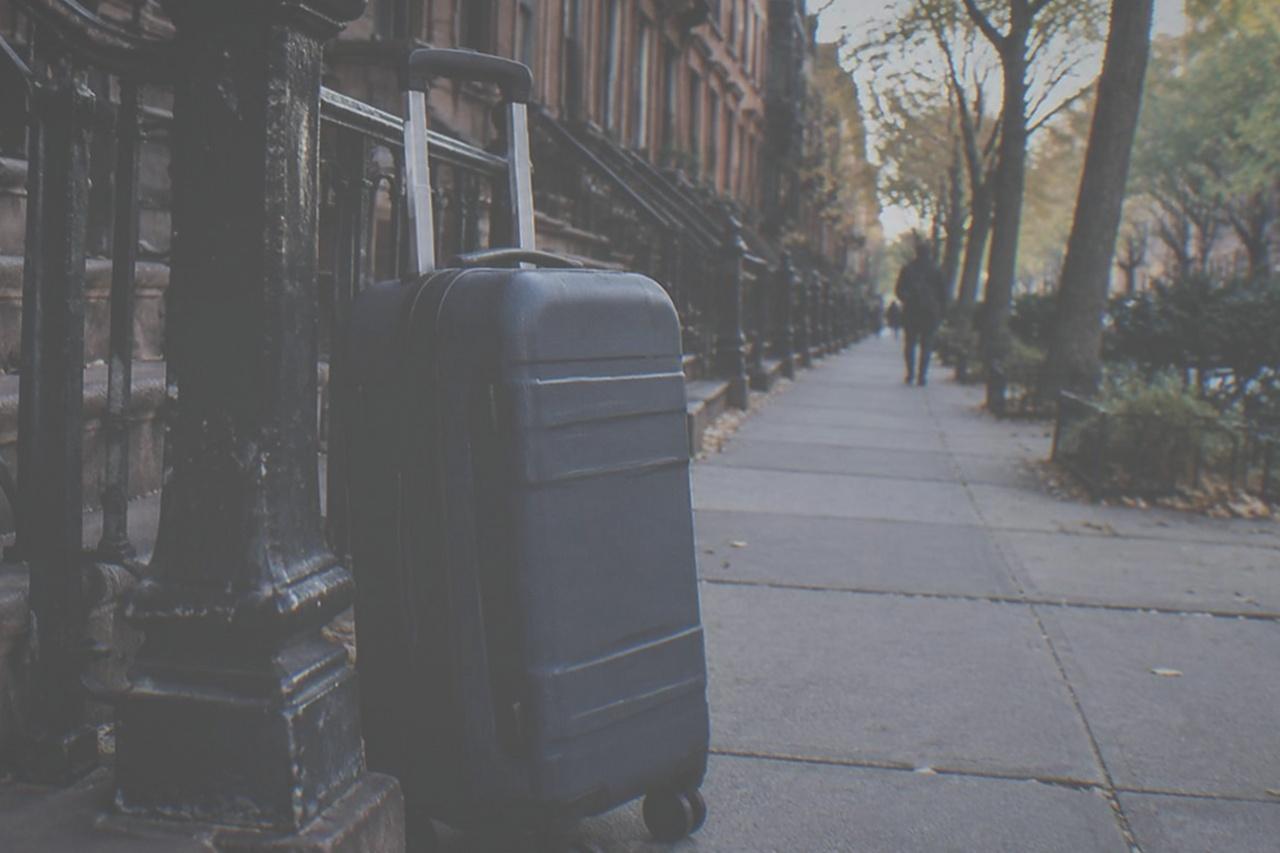
New York is one of the few big cities where the answer to this question is genuinely two-sided. On one side, the transit system is remarkably permissive: the MTA's rulebook contains no suitcase size limit at all, and the agency's own rider guide simply tells you not to carry more than you can manage. On the other side sit the doors of the city itself. Yankee Stadium, Madison Square Garden, the Empire State Building, One World Observatory and the Whitney all publish rules that refuse luggage outright, and several state plainly that no storage exists on site. So the walk is possible. The destination often is not.
This page walks through what the rules actually say, transit first and venues second, then does the practical maths on distances and crowds, and finishes with where the bag can go instead. The figures throughout come from the operators' own published pages: the MTA's Rules of Conduct, venue policy pages, and Amtrak's baggage terms.
Is It Possible To Walk Around With A Suitcase In NYC
Yes, it is possible, and no transit rule stops you. The MTA's Rules of Conduct contain no suitcase size limit; the only dimension anywhere in the rulebook is thirty inches, and it applies to wheeled carts, not luggage. The obstacles are the destinations: most major New York venues refuse luggage at the door, and several publish that they have no storage on site.
Start with the transit half, because it is the half almost everyone gets wrong. The MTA Rules of Conduct, 21 NYCRR Part 1050, were long treated as unreachable, but the official MTA-hosted PDF is now on the record, and what it contains is a genuine surprise. Section 1050.9(g) is the only rule that puts a number on what a rider may carry, and that number, thirty inches in either length or width, applies to wheeled carts: shopping carts, grocery baskets, and similar. A suitcase is not a cart. Everything else in the section is a behaviour test rather than a measurement. An item may not be so long that it extends outside a subway car window or door, may not constitute a hazard, may not impede passenger traffic, and may not endanger other riders. A normal carry-on or checked-size suitcase fails none of those tests in a half-empty car. In a packed rush hour car, it might fail all of them.
The MTA's own rider guide says the same thing in plainer words, and adds advice aimed squarely at the person dragging a suitcase across Manhattan: "Don't travel with more than you can carry on your own, and avoid rush hour if you're transporting something big. Make space for other riders and don't block doors, stairs, or passageways." That is the agency telling you, in its own voice, that the problem with a suitcase in New York is not permission, it is logistics.
There is one more genuinely interesting negative in the rulebook. The MTA Rules of Conduct contain no unattended-property provision at all. A full-text search returns zero matches for "unattended" and zero for "abandon". Other New York operators do publish such rules: the Port Authority Bus Terminal prohibits abandoning any property, the Staten Island Ferry rules forbid leaving property unattended in terminals or on ferries, and the LIRR timetable states that luggage may not be left unattended. The subway rulebook does not. Plenty of pages claim the MTA bans unattended bags; the rulebook simply does not say that.
If your walk involves commuter rail rather than the subway, the LIRR publishes its own luggage rule in its City Terminal timetable: "Luggage should be stored in overhead racks and not take up seat space or block the aisles or doorways of trains. Luggage may not be left unattended. Bags and containers are subject to random search by MTA police." That is a rule about where the case goes on the train, not whether you may bring it.
The practical upshot of all this: the suitcase survives the journey. What it does not survive is the destination, which is the next section. And if the walk is more than a few blocks, the arithmetic of distance and crowd, covered further down, is what actually decides whether the day is pleasant or miserable.
What The MTA Rules And Fines Actually Say About Carrying A Bag
The MTA publishes real dollar fines for the two things a traveller with luggage actually does wrong: blocking a seat and blocking traffic. Obstruction of seating, facilities, elevators or escalators is $50, carrying an obstructive object is $75, and obstruction of operations or traffic is $100. There is no fine for carrying a suitcase as such, because no rule forbids it.
The fine schedule sits in the same document as the conduct rules, and it prices each offence separately. Here is what a rider with a large bag needs to know.
| Rule | Offence | Fine |
|---|---|---|
| 1050.9(g)1 | Carrying a long object | $75 |
| 1050.9(g)2 | Carrying obstructive objects, including carts over 30 inches | $75 |
| 1050.9(g)3 | Carrying a hazardous object | $75 |
| 1050.7(j) | Obstruction of seating, facilities, elevators, escalators | $50 |
| 1050.6(a) | Obstruction of operations or traffic | $100 |
The seat rule is the one that bites in practice. Section 1050.7(j)(1) forbids anyone to "occupy more than one seat on a station, platform or conveyance when to do so would interfere or tend to interfere with the operation of the transit system or the comfort of other passengers." The traveller who parks a suitcase on the seat beside them is inside that rule, and the $50 line prices it. The rider guide repeats the cart limit in plain language: carts larger than 30 inches in length or width are not allowed, and anything so long it sticks out of a subway window or door is not either.
For a fuller treatment of the rail side, including the LIRR and commuter-rail rules, see the guide to taking luggage on the subway and commuter rail. The short version for a walker: carry the bag, keep it off seats, keep it out of doorways, and the rules are satisfied.
One more transit-adjacent point worth knowing: if your walk ends at Penn Station, Amtrak operates the only real left-luggage counter inside a Manhattan transport hub. Its published rates are $20 per item per 24 hours for Amtrak customers with a valid ticket, and $30 per item per 24 hours for the general public with photo ID. Moynihan Train Hall publishes its own hours, 5:00 AM to 1:00 AM daily, and during the overnight gap Amtrak and LIRR services move across the avenue, which matters if you need the bag back at 2 AM. The details, including the honest disagreement between Amtrak's and Moynihan's pages about who qualifies, are in Amtrak baggage and bag storage at Penn Station.
Which New York Venues Refuse A Suitcase At The Door
Most of them. Yankee Stadium allows only one soft-sided bag up to 16 by 16 by 8 inches, Madison Square Garden caps bags at 22 by 14 by 9 inches, and the Whitney prohibits luggage of any size or type outright. The Empire State Building, Top of the Rock and One World Observatory all refuse luggage and publish that they have no storage on site.
This is the half of the answer that no transit rule protects you from. Venue by venue, from each operator's own published policy page:
| Venue | Published bag limit | Luggage refused? | Storage on site? |
|---|---|---|---|
| Yankee Stadium | One soft-sided bag, 16 x 16 x 8 inches | Yes | No, "no storage area for any items" |
| Madison Square Garden | 22 x 14 x 9 inches | Yes, implicitly | No |
| Radio City Music Hall | 22 x 14 x 9 inches | Yes, implicitly | No |
| One World Observatory | 25 x 17 x 9 inches | Yes | No lockers or storage |
| Empire State Building | Not published as a dimension | Yes | No locker or storage facilities |
| Top of the Rock | Not published as a dimension | Yes | Storage not available on site |
| Guggenheim | 22 x 14 x 9 inches including handles and wheels | Yes, cannot even be checked | Free coat check with admission |
| Whitney | Not published | Yes, any size or type | Complimentary coat check, Floor -1 |
| 9/11 Memorial & Museum | 19 x 17 x 8 inches onto the Memorial | Yes | Coat Rooms for visitors |
| American Museum of Natural History | Bags over 11 x 17 inches refused | Yes | Paid lockers, $7 and $12 per day |
| SUMMIT One Vanderbilt | Larger than a standard backpack prohibited | Yes | Not published |
A few of these deserve their own words. Yankee Stadium's policy is the strictest of the big venues: one MLB-compliant soft-sided bag, no larger than 16 inches by 16 inches by 8 inches, plus one smaller personal item, with all hard-sided bags and containers strictly prohibited, and sizers used at entry points. The stadium's own page adds the sentence that matters most to this article: "There is no storage area for any items at Yankee Stadium." The full treatment is in the Yankee Stadium bag policy guide.
The American Museum of Natural History is the one venue that both refuses luggage and operates genuine lockers, at $7 per day for a small locker and $12 per day for a large one, available until 5 PM. The catch is size: the large locker measures 22 x 11 x 19.5 inches, roughly carry-on sized, and the museum's own visitor information refuses luggage at the door. The lockers are for coats and day bags. A suitcase does not fit the plan. The rest of the planning pages sit on Luggage Storage Lockers in New York City.
Broadway deserves a careful paragraph, because the rules differ by theatre owner. The Nederlander Organization's ticketing site publishes an identical block on every one of its theatre pages checked: "All bags will be inspected upon arrival. Bags larger than 20"x14"x9" cannot be checked or allowed inside the theatre. Luggage is prohibited." The Shubert Organization, by contrast, publishes no bag rule at all on its theatre pages. So there is no single "Broadway bag policy"; there is a Nederlander rule and a Shubert silence, and the honest advice is in Broadway theatre bag rules.
The Statue of Liberty is the special case that proves the pattern. The National Park Service states there are no locker storage areas at the screening facilities in either The Battery or Liberty State Park, and suitcases and carry-on luggage are not permitted on the ferries or on either island. Real coin lockers exist at the entrance to the monument itself, rentable for 2 hours for a 25-cent deposit, but they only hold what you are already carrying, because luggage cannot board the ferry in the first place. The details are in observation deck and monument bag rules.
How Far Is Too Far: The Practical Maths Of Walking With A Bag
Distances are the real killer, not the rules. Midtown blocks run roughly 20 to a mile, so a walk from Penn Station to Times Square is about eight blocks of sidewalk, and a walk from Grand Central to the Empire State Building is comparable. With a wheeled case over uneven pavement, grates and curbs, most travellers regret anything past ten blocks.
New York's grid makes this easy to estimate in advance. The numbered avenues run long, the numbered streets run short, and the blocks are short enough that a suitcase-free walk feels trivial. Add a 20-plus kilogram case and the same walk changes character. The specific friction points are real: subway stairs when an elevator is missing or out of service, platform gaps, turnstiles designed for people rather than roller bags, and the crowd-doubling of weekday rush hours, which the MTA itself tells you to avoid when transporting something big.
Then there is the weather and the season. A suitcase in a July sidewalk crowd is a different object from a suitcase in a February wind tunnel between the avenue towers. Neither is banned. Both are miserable.
The decision framework that falls out of all this is simple. If the day is one destination with a bag-friendly door, for instance a hotel, a park, or a venue with a coat check that accepts large items, walking with the case is workable. If the day is two or more venues, or any venue from the table above, the case needs a home base. That is the moment a storage point earns its fee, and it is why this site exists at all. The how to choose a luggage storage spot in New York guide covers the selection side; the price side is quick to state here. Across the eight areas this site covers, the typical rate is $4.90 per bag per day, plus a $1.99 per-bag checkout fee, so one bag for one day comes to $6.89 all in. Radical Storage's own New York page advertises a "from $2.90" floor price, but the operator itself now disclaims that figure, saying the final amount depends on the selected partner, booking date and bag category, and this site's own measurement found $4.90 on 168 of 178 New York point cards.
Where The Bag Goes Instead: Storage Points Near Where You Are Walking
If the walk is in Midtown, there are 16 storage points within 800 metres of the area's central anchor, rated 4.7 across 596 reviews, at the typical $4.90 per bag per day plus the $1.99 checkout fee. Times Square has 44 points rated 4.79 across 2400 reviews, and Brooklyn has 11 points rated 4.82 across 79 reviews.
Every one of those points is a staffed counter at a local business, not a locker. That is true across all 88 distinct storage points this site lists in New York, and it is true of the wider Radical Storage network in the city too: zero of the 178 points in its New York inventory is a self-service locker. The place types are shops, cafes, convenience stores, delivery services, restaurants and hotels. Practically, this means a person hands the bag over, gets a receipt, and collects it later; there is no code, no locker door, no coin slot.
The Midtown option is the one most walkers end up using, because Midtown is where the walks are: the Empire State Building, Bryant Park, Grand Central, the theatre district and Times Square all sit inside or beside it. Midtown Manhattan's 16 storage points carry a 4.7 rating across 596 reviews, with 15 of them publishing opening hours, so the coverage of the day is good.
Times Square is the densest of the three, with 44 storage points within 800 metres of the anchor, rated 4.79 across 2400 reviews, and 42 of the points publishing hours. For a day that ends at a Broadway house, where the Nederlander rule prohibits luggage outright, a bag dropped near the theatre district is the difference between making the curtain and watching the show from the sidewalk.
Brooklyn is the smallest of the three, with 11 points rated 4.82 across 79 reviews, and it is the right answer for a different kind of day: a morning in the park or the museums, an afternoon in Williamsburg, a bag that needs to sit somewhere while the borough gets explored. One honest note from traveller reporting that is worth setting expectations with: reviews on Trustpilot include a detailed complaint that the company "refuses to share even an approximate storage address until AFTER you've paid". A booking buys an area and a partner, and the exact street address follows the payment. Knowing that in advance makes the process smoother.
Two more things belong in any honest storage paragraph. The guarantee that backs each stored bag is worth EUR 3,000 per bag under the operator's terms, and the terms are the binding document; the marketing pages advertise a larger figure, sometimes in dollars and sometimes in euros on the same page, and that figure appears nowhere in the terms. And the prohibited-items clause matters: electronics, including phones, tablets and laptops, are on the operator's own prohibited list and are not accepted for storage at all. The full treatment of both is in what the Radical Storage guarantee actually covers and what you cannot leave in a stored bag in New York.
Common Questions About Walking Around With A Suitcase In NYC
is it possible to walk around with a suitcase in nyc?
Yes. No transit rule forbids it, and the MTA rulebook's only dimension, thirty inches, applies to wheeled carts rather than luggage. The obstacles are the venues: most stadiums, observatories and museums refuse luggage at the door, and several publish that they have no storage on site.
Can I take a suitcase on the New York subway?
Yes. The MTA Rules of Conduct contain no suitcase size limit. The rules that apply are behavioural: nothing so long it extends outside a car door, nothing that impedes passenger traffic, and no occupying a second seat with the bag, which carries a $50 fine.
Is there a size limit for bags at New York attractions?
Each venue publishes its own. Yankee Stadium allows one soft-sided bag up to 16 x 16 x 8 inches, Madison Square Garden and Radio City cap bags at 22 x 14 x 9 inches, One World Observatory at 25 x 17 x 9 inches, and the 9/11 Memorial at 19 x 17 x 8 inches onto the Memorial. The numbers are not interchangeable between venues.
Do any New York venues have lockers I can use?
Two, with limits. The American Museum of Natural History rents lockers at $7 and $12 per day, but refuses luggage at the door, so the lockers hold coats and day bags only. The Statue of Liberty monument rents coin lockers for 2 hours for a 25-cent deposit, but they hold only what you are carrying, since luggage cannot board the ferry.
How much does it cost to store a bag for the day instead?
The typical rate across the areas this site covers is $4.90 per bag per day, plus a $1.99 per-bag checkout fee, so one bag for one day is $6.89 all in. Radical Storage advertises a "from $2.90" price, but its own page now calls that a floor rather than a promise, and $4.90 is the rate on the overwhelming majority of New York point cards.
Are the storage points lockers or staffed counters?
Staffed counters, without exception. Zero of the 178 Radical Storage points in New York City is a locker; the network is shops, cafes, convenience stores, restaurants and hotels. You hand the bag to a person and get a receipt, which is also why the operator's terms, including the electronics prohibition, apply to what you can leave.